
Vision Therapy: Benefits, Exercises & Treatment Guide (2026)
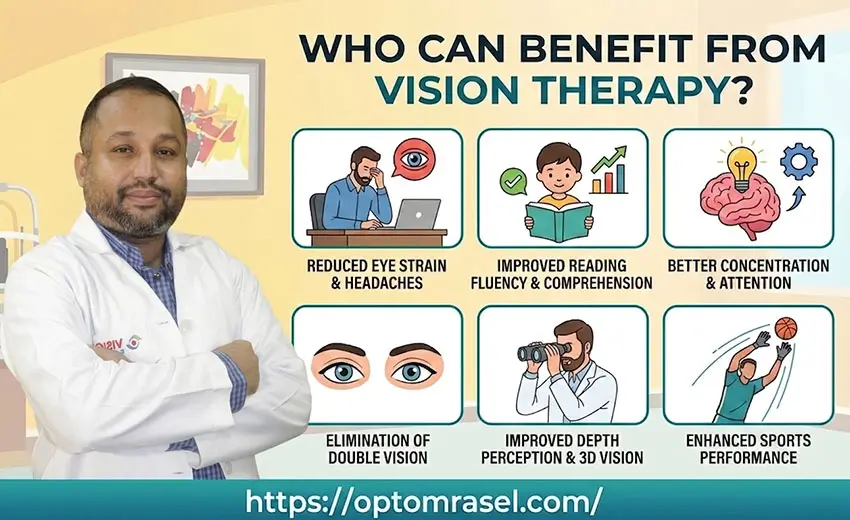
Vision therapy is a structured, clinician-supervised program of eye and brain exercises designed to correct or improve specific visual skills and processing. Unlike glasses or contact lenses that simply compensate for refractive errors, vision therapy trains the visual system to work more efficiently, addressing the root cause of many vision problems. If you or your child struggles with reading difficulties, eye strain, double vision, or poor eye coordination, vision therapy may be the solution your optometrist has not yet discussed with you. This guide covers everything you need to know, from how vision therapy works to the conditions it treats and the exercises involved. What Is Vision Therapy? Vision therapy (also called vision training or orthoptic therapy) is a personalized treatment program prescribed and supervised by an optometrist. It uses a series of eye exercises, optical tools such as prisms and lenses, and specialized activities to retrain the visual system. The goal is to improve the communication between the eyes and the brain a process known as visual processing. Many patients who struggle with learning, reading, sports performance, or daily tasks have underlying visual deficits that standard eye tests do not detect. Vision therapy is not a one-size-fits-all approach. Each program is tailored to the patient’s specific diagnosis following a comprehensive binocular vision assessment. “Vision therapy is designed to improve how the eyes and brain work together. With proper diagnosis and individualized treatment, many patients experience significant improvements in visual performance and daily activities.” Dr. Mohammad Abdul Auwal Rasel, Optometrist & Vision Therapy Specialist, Bangladesh How Vision Therapy Works The visual system is not fully developed at birth. It continues to mature through childhood and can be retrained at any age through targeted neurological exercises. Vision therapy leverages this brain plasticity the ability of the brain to form new neural connections to build stronger, more efficient visual skills. A typical vision therapy program includes: Initial assessment: A detailed binocular vision evaluation to identify deficits in eye alignment, focusing ability, eye movement, and visual processing. Personalized treatment plan: Exercises and activities are prescribed based on the specific diagnosis not a generic routine. Weekly in-office sessions: Supervised sessions with an optometrist or trained vision therapist, usually lasting 45-60 minutes. Home reinforcement exercises: Patients practice assigned activities at home between sessions to reinforce learning. Progress monitoring: Regular re-assessments ensure the program is delivering results and is adjusted as needed. Sessions may use tools such as prism lenses, polarized glasses, balance boards, computer-based programs, and hand-eye coordination activities all chosen to target the specific deficit being treated. Who Can Benefit from Vision Therapy? Vision therapy is not limited to children or to people with poor eyesight. A wide range of patients benefit from this treatment, including those with perfectly normal visual acuity (20/20 vision) who still experience significant visual discomfort or functional difficulties. Children with Learning-Related Vision Problems Many children diagnosed with learning difficulties, attention problems, or reading delays actually have undetected visual skill deficits. Poor eye tracking, reduced focusing stamina, or weak eye teaming can make reading exhausting and slow leading to avoidance, frustration, and academic underperformance. A child who loses their place while reading, rubs their eyes frequently, tilts their head when looking at a page, or complains of headaches after short reading periods may be experiencing a treatable vision problem, not a learning disability. Adults with Binocular Vision Disorders Adults are not too old for vision therapy. Many adults live for years with symptoms such as eye strain after screen use, difficulty concentrating, headaches, or depth perception problems without realizing these are signs of a binocular vision disorder. Vision therapy can significantly reduce or eliminate these symptoms. Patients Recovering from Brain Injury Traumatic brain injury (TBI), stroke, and concussion frequently disrupt the visual system. Patients may experience double vision, difficulty tracking moving objects, visual field loss, or sensitivity to light. Neuro-optometric rehabilitation a specialized branch of vision therapy, helps these patients regain functional visual skills and improve their quality of life. Common Conditions Treated with Vision Therapy Vision therapy addresses a broad range of diagnosed visual conditions. The following are among the most frequently treated. Lazy Eye (Amblyopia) Amblyopia commonly called lazy eye occurs when one eye fails to develop normal visual acuity during childhood, usually because the brain begins to suppress input from that eye. Traditional treatment relied solely on patching the stronger eye, but modern vision therapy takes a more comprehensive approach. By training both eyes to work together, vision therapy produces better, more lasting outcomes than patching alone. Eye Teaming Problems (Strabismus) Strabismus is a condition where the eyes do not point in the same direction simultaneously. This breaks down normal binocular vision and can lead to double vision or suppression of one eye’s image. Vision therapy sometimes in combination with surgery helps train the eyes to align and coordinate properly. Eye Tracking Difficulties Smooth, accurate eye movement is essential for reading, driving, and sports. When the eyes jump, skip, or lose fixation during tracking tasks, reading becomes slow and effortful. Vision therapy exercises can substantially improve eye movement control, making these daily activities easier and less tiring. Double Vision (Diplopia) Double vision can result from misaligned eyes, muscle imbalances, or neurological conditions. Vision therapy, using prisms and targeted exercises, can help the brain resolve the conflicting images from both eyes reducing or eliminating double vision in many patients. Convergence Insufficiency Convergence insufficiency (CI) is one of the most common and most frequently missed binocular vision disorders. It occurs when the eyes struggle to turn inward together to focus on near objects, causing symptoms such as double vision, blurred near vision, headaches, and difficulty sustaining concentration. Research, including clinical trials funded by the National Eye Institute, has shown that in-office vision therapy is the most effective treatment for convergence insufficiency. Vision Therapy Exercises Vision therapy exercises are prescribed specifically for each patient’s condition. They are never a substitute for professional evaluation, but the following are commonly included in supervised programs. Do not attempt these as self-treatment
Nystagmus Therapy
Nystagmus therapy in Bangladesh.
Artificial Eye Service
Artificial Eye Service, Customized Ocular Prosthesis
কৃত্রিম চোখ: হারানো আত্মবিশ্বাস ফিরে পাওয়ার আধুনিক চিকিৎসা

মানুষের চোখ শুধু দেখার অঙ্গই নয়, এটি তার অনুভূতি, আত্মবিশ্বাস ও ব্যক্তিত্বের প্রকাশক। জন্মগত ত্রুটি, দুর্ঘটনা কিংবা রোগজনিত কারণে চোখ হারানো ব্যক্তি শারীরিক কষ্টের পাশাপাশি মানসিক ও সামাজিক সংকটে পড়েন। আধুনিক চিকিৎসাবিজ্ঞান ও প্রযুক্তির অগ্রগতিতে আজ কৃত্রিম চোখ সেই সংকট অনেকটাই কাটিয়ে উঠতে সহায়তা করছে। বিশেষত কাস্টমাইজড কৃত্রিম চোখ একজন মানুষকে স্বাভাবিক জীবনে ফিরিয়ে আনার ক্ষেত্রে গুরুত্বপূর্ণ ভূমিকা রাখছে। এই প্রবন্ধে কৃত্রিম চোখ, এর প্রয়োজনীয়তা, ধরন ও সুবিধা সম্পর্কে সংক্ষেপে আলোচনা করা হলো। ১. কৃত্রিম চোখ (Artificial Eye Ball) একজন মানুষের চোখের মাধ্যমেই তার ব্যক্তিত্ব অনেকাংশে প্রকাশ পায়। যাদের জন্মগতভাবে চোখ নেই কিংবা অপারেশন অথবা দুর্ঘটনাজনিত কারণে চোখ হারাতে হয়েছে, তাদের কষ্টের সীমা থাকে না। আধুনিক বিজ্ঞান, প্রযুক্তি ও শিল্পকলার সমন্বয়ে পলিমার ফাইবার পিএমএমএ (PMMA) অথবা সিলিকন দিয়ে তৈরি কাস্টমাইজড কৃত্রিম চোখ আজ এমন এক সমাধান এনে দিয়েছে, যার মাধ্যমে কোনো প্রকার সংকোচ ছাড়াই আত্মবিশ্বাসের সঙ্গে নিজেকে উপস্থাপন করা সম্ভব। ২. কেন কৃত্রিম চোখ সংযোজন করবেন সময়মতো সঠিক মাপের কৃত্রিম চোখ সংযোজন না করলে অক্ষিকোটরের চারপাশের মাংসপেশি অস্বাভাবিকভাবে বৃদ্ধি পেয়ে ভেতরের গঠন নষ্ট হয়ে যেতে পারে। বাইরে থেকে ধুলাবালি ও পানি ঢুকে সংক্রমণ হওয়ার ঝুঁকি থাকে, যা পরবর্তী সময়ে আরও বড় ক্ষতির কারণ হতে পারে। এ ছাড়া সামাজিক ও পারিবারিক জীবনে একাকিত্ব তৈরি হয়। শিক্ষার্থীদের ক্ষেত্রে পড়াশোনায় অনীহা দেখা দেয়, কর্মজীবনে ভালো সুযোগ পাওয়াও কঠিন হয়ে পড়ে। ৩. কাস্টমাইজড কৃত্রিম চোখের সুবিধাসমূহ প্রতিটি মানুষের অক্ষিকোটরের ভেতরের মাপ, আইরিসের রং ও স্ক্লেরা বা সাদা অংশের রং ভিন্ন হয়। ব্যক্তিভেদে এসব বৈশিষ্ট্য অনুযায়ী সঠিক মাপ ও রং মিলিয়ে জীবাণুমুক্তভাবে যে কৃত্রিম চোখ তৈরি ও সংযোজন করা হয়, তাকেই কাস্টমাইজড কৃত্রিম চোখ বলা হয়। পার্শ্বপ্রতিক্রিয়াহীন এই কৃত্রিম চোখ পিএমএমএ বা সিলিকন মেডিকেটেড ম্যাটেরিয়াল দিয়ে তৈরি হওয়ায় সংক্রমণের ঝুঁকি থাকে না। এই কৃত্রিম চোখে ময়লা পানি ঢোকার সম্ভাবনা নেই। এটি দেখতে অনেকটাই স্বাভাবিক চোখের মতো, ফলে বাইরে থেকে দেখে কৃত্রিম চোখ শনাক্ত করা কঠিন। প্রতিদিন খুলে পরিষ্কার করার প্রয়োজন হয় না; মাসে একবার পরিষ্কার করলেই যথেষ্ট। স্বাভাবিক চোখের মতো নড়াচড়া করে এবং প্রয়োজনে আকার, রং বা মাপে সহজেই পরিবর্তন করা যায়। ৪. রেডিমেড কৃত্রিম চোখ সংযোজনে অসুবিধাসমূহ রেডিমেড কৃত্রিম চোখ সাধারণত প্লাস্টিকের উপাদান দিয়ে তৈরি হয় এবং জীবাণুমুক্ত করার মানসম্মত প্রক্রিয়া অনুসরণ করা হয় না। প্লাস্টিক হওয়ায় এগুলো ঠিকভাবে পালিশ করা সম্ভব নয়। আকার, আকৃতি, আইরিস ও স্ক্লেরার রং নির্দিষ্ট ধরনের হওয়ায় ব্যক্তিভেদে মানানসই হয় না। ব্যবহারের সময় প্রায়ই ময়লা পানি আসে, নিয়মিত খুলে পরিষ্কার করতে হয়, যার ফলে অক্ষিকোটরের ভেতরের গঠন ক্ষতিগ্রস্ত হওয়ার আশঙ্কা থাকে। ৫. শিশুরা কখন কাস্টমাইজড কৃত্রিম চোখ সংযোজন করতে পারবে শিশুদের ক্ষেত্রে ক্যান্সারজনিত কারণে, জন্মগতভাবে চোখ না থাকা অথবা আঘাতজনিত কারণে অপারেশনের মাধ্যমে চোখ অপসারণ করতে হলে যত দ্রুত সম্ভব কাস্টমাইজড কৃত্রিম চোখ সংযোজন করা উচিত। দেরি হলে অক্ষিকোটরের ভেতরে মাংসপেশি অস্বাভাবিকভাবে বৃদ্ধি পেয়ে গঠন নষ্ট হয়ে যেতে পারে, যা পরবর্তীতে কৃত্রিম চোখ সংযোজনকে জটিল করে তোলে। ৬. অরবিটাল ফেসিয়াল প্রস্থেসিস কী অরবিটাল ফেসিয়াল প্রস্থেসিস হলো এমন একটি প্রযুক্তি, যার মাধ্যমে কৃত্রিম চোখের পাশাপাশি চোখের পাতা ও পাপড়ি প্রতিস্থাপন করা হয়। দুর্ঘটনা বা ক্যান্সারের কারণে অনেক সময় অকুলোপ্লাস্টিক সার্জনের মাধ্যমে চোখের পাতা ও পাপড়ি অপসারণ করতে হয়। এ ক্ষেত্রে রোগীর ত্বকের রঙের সঙ্গে সামঞ্জস্য রেখে পিএমএমএ ও সিলিকন দিয়ে কৃত্রিম চোখ, চোখের পাতা ও পাপড়ি তৈরি করা হয়। প্রয়োজনে স্পেকট্যাকল প্রস্থেসিসের মাধ্যমেও এই প্রতিস্থাপন করা সম্ভব। কৃত্রিম চোখে দৃষ্টিশক্তি না থাকলেও এটি রোগীর নিঃসঙ্গতা দূর করে একটি স্বাভাবিক ও মর্যাদাপূর্ণ জীবন ফিরে পেতে সহায়তা করে। কাস্টমাইজড কৃত্রিম চোখ সংযোজন করুন, আত্মবিশ্বাসের সঙ্গে নিজেকে উপস্থাপন করুন। লেখক: মোহাম্মদ আবদুল আউয়াল (রাসেল), চক্ষু পুনর্বাসন ও কৃত্রিম চক্ষু সংযোজন বিশেষজ্ঞ। এমপিএইচ (ঢাকা), এমএসসি ইন অপটোমেট্রি (পাঞ্জাব); লং-টার্ম ফেলো ইন অকুলারিস্ট (এমওপি, মুম্বাই); অ্যাডভান্সড ট্রেনিং ইন ভিশন থেরাপি ও কন্টাক্ট লেন্স (আরইএইচ, পাঞ্জাব); কনসালটেন্ট অকুলারিস্ট। ডা. মঈন কৃত্রিম চক্ষু সংযোজন কেন্দ্র, ধামরাই, সাভার, ঢাকা এবং দৃষ্টি আই হাসপাতাল, বনশ্রী, রামপুরা, ঢাকা।
10 Easy Eye Exercises to Improve Vision: Techniques and Tips
Uncategorized 10 Easy Eye Exercises to Improve Vision: Techniques and Tips adminSeptember 5, 2025 Uncategorized Best Vision Therapy in Dhaka, Bangladesh | Trusted Eye Care adminSeptember 5, 2025 Eye exercises to improve vision are not a myth—they’re proven methods to relieve strain and boost eye performance. Just a few minutes a day can make a big difference for people dealing with digital eye fatigue. Your eyes work harder than ever in today’s screen-driven world. Whether it’s scrolling through social media, working long hours on the computer, or binge-watching your favorite show, your eyes rarely get the rest they deserve. Over time, this can lead to digital eye strain, blurred vision, headaches, and overall discomfort. While eye exercises won’t magically fix every vision problem—like needing glasses for severe myopia—they can help strengthen your eye muscles, improve focus, and reduce fatigue. The key is consistency. Just like stretching keeps your body flexible, simple eye workouts can keep your vision sharp and your eyes relaxed. Below are 10 effective eye exercises that you can practice daily. Each comes with easy-to-follow steps and tips so you can make them part of your routine. 1. Palming Technique (For Relaxation) Why it helps: Palming is one of the simplest ways to relax tired eyes. It reduces strain and calms your nervous system by cutting out visual stimuli. How to do it: Rub your hands together until they feel warm. Close your eyes and gently cup your palms over them—without pressing on the eyeballs. Make sure no light gets through. Relax and breathe deeply for 1–2 minutes. Pro Tip: Do this every hour if you work on a computer. It’s like a mini spa break for your eyes. 2. Blinking Eye Exercise (For Moisture and Focus) Why it helps: Staring at screens makes us blink less, which dries out the eyes and causes irritation. Conscious blinking refreshes and lubricates them. How to do it: Sit comfortably and look straight ahead. Blink quickly 10–15 times. Close your eyes gently and relax for 20 seconds. Repeat 2–3 times. Pro Tip: Set a reminder on your phone or computer to blink more often while working. 3. Near and Far Focusing (For Strengthening Focus) Why it helps: Switching focus between near and far objects improves your eyes’ ability to adjust quickly, which is especially useful if you spend hours reading or typing. How to do it: Hold your thumb about 10 inches from your face. Focus on it for 10–15 seconds. Shift your gaze to an object 10–20 feet away. Focus for another 10–15 seconds. Repeat the cycle 10 times. Pro Tip: Try this by looking out a window during work breaks. It relieves digital strain instantly. 4. Eye Rolling (For Flexibility) Why it helps: Just like stretching your body, rolling your eyes keeps the muscles flexible and improves overall movement. How to do it: Sit up straight and relax. Slowly roll your eyes clockwise in a full circle. Do this 5–10 times, then switch to counterclockwise. Pro Tip: Avoid doing this too quickly—it should feel smooth, not rushed. 5. The 20-20-20 Rule (For Digital Eye Strain) Why it helps: This isn’t exactly an exercise, but it’s a powerful habit to protect your eyes from screens. It relaxes the focusing muscles and prevents fatigue. How to do it: Every 20 minutes, look at something at least 20 feet away for 20 seconds. Pro Tip: Place a sticky note on your monitor with “20-20-20” written on it until it becomes second nature. 6. Figure Eight Eye Exercise (For Eye Control) Why it helps: This eye exercise improves your vision and helps the coordination and flexibility of your eye muscles, making movements smoother. How to do it: Imagine a giant figure eight (∞) about 10 feet in front of you. Trace it slowly with your eyes for 30 seconds. Switch directions and repeat. Pro Tip: This is excellent for improving tracking skills, especially if you read a lot or play sports. 7. Focus Shifting (For Eye Agility) Why it helps: Shifting your focus strengthens the eye muscles responsible for adjusting vision between near and far distances. How to do it: Hold your index finger a few inches from your nose. Focus on it for 5–10 seconds. Quickly shift focus to an object far away. Switch back and forth 10–15 times. Pro Tip: If you wear glasses, try doing this without them to give your natural vision some practice. 8. Zooming Eye Exercise (For Concentration and Flexibility) Why it helps: Zooming trains your eyes to adjust their focus smoothly from near to far, reducing strain during daily tasks. How to do it: Stretch your arm out with your thumb pointing upward. Focus on your thumb while slowly bringing it closer to your face—until it’s about 3–4 inches away. Slowly move it back to arm’s length. Repeat 10 times. Pro Tip: Do this in a quiet place—it also doubles as a calming breathing exercise. 9. Eye Massage (For Circulation) Why it helps: Gentle massage stimulates blood flow around the eyes, relaxes muscles, and can even help reduce dark circles. How to do it: Wash your hands thoroughly. With your ring finger, gently massage around your closed eyes in small circular motions. Focus especially on the temples and the area just below your eyebrows. Pro Tip: Don’t press too hard on the eyeballs—stick to the surrounding muscles. 10. Pencil Push-Ups (For Convergence Training) Why it helps: This exercise strengthens the eye muscles used for converging (turning inward), which is crucial for reading and focusing on close tasks. How to do it: Hold a pencil at arm’s length, pointing upward. Slowly bring it toward your nose, keeping it clear and in focus. Stop when it becomes blurry or doubles, then move it back. Repeat 10–15 times. Pro Tip: This is often prescribed by eye doctors for patients with convergence insufficiency. Additional Tips for Eye Health Eat eye-friendly foods: Carrots, spinach, fish, and nuts are loaded with vitamins and omega-3 fatty acids that support eye health. Stay
Best Vision Therapy in Dhaka, Bangladesh | Trusted Eye Care

If you (or your kid) are constantly battling things like lazy eye, eye strain, or just trouble focusing, you’re not alone. And no, glasses alone don’t always fix it. That’s where we come in. Mr. MAA Rasel has been in this game for over 5 years. Not to brag (ok, maybe a little), but he has worked with 15000+ patients dealing with everything from lazy eye to messed-up depth perception. This is the place people end up after trying all the usual stuff and realizing, “Yeah, glasses alone aren’t cutting it. He is an experienced vision therapist, clinic’s right in Dhaka — super easy to find if you’ve been typing in “vision therapist near me”, “vision therapy clinic near me”, or “amblyopia vision therapy near me”. You will find him. He just wants your eyes (or your kid’s eyes) to work better. He is damn good at it. What Is Vision Therapy? Vision Therapy is a nonsurgical treatment designed to improve eye coordination, movement, and visual performance. It addresses challenges such as eye misalignment and visual processing issues. It uses modern techniques and is offered at an affordable cost. Conditions managed with Vision Therapy include: Amblyopia (lazy eye) eyes not lining up right) Problems with focus, tracking, or coordination Hand-eye messiness (ever miss the ball in sports? yeah, that.) It’s not painful. Not risky and Highly effective when treated under the supervision of experienced vision therapist. Pretty darn effective. Who Needs Vision Therapy? Honestly? More people than you think. If you or your kid… Hate reading because it’s hard to focus Get tired eyes or headaches after staring at screens See double or feel off-balance sometimes Have clear eyesight but still struggle in school …then it might be time to give vision therapy a real shot. (And if you just searched “vision therapy near me” — yep, we’re in Dhaka. Right in the middle of everything.) Vision Therapy Service Offer Lazy Eye (Amblyopia) Treatment Low vision rehabilitation. Binocular Vision Problem Nystagmus Squint One-on-one, personalized therapy sessions Equipped with modern diagnostic tools. Book Consultation, your trusted vision therapy center in Dhaka, Bangladesh. Why Choose Mr. MAA Rasel Eye Care? Mr. MAA Raser – a certified vision therapist optometrist. He has been doing this for over 5 years. He has helped more than 15000 patients, sharpen their vision, and boost their confidence. . What you get: Real clinical experience Modern tools & tech (nothing outdated here) A clinic that’s cozy and kid-approved A team trusted by doctors, teachers, and parents across Bangladesh Frequently Asked Questions (FAQs) – Vision Therapy in Dhaka 1. Can I get vision therapy near me in Dhaka? Yes! We are conveniently located and serve patients from all areas of Dhaka. 2. Is it painful or uncomfortable? No—instead, exercises engage you mentally and visually. Some eye fatigue or headaches may occur, which are normal. 3. Is vision therapy only for children? Not at all! Adults with focusing problems, traumatic brain injuries, or digital eye strain can benefit too. 4. How long does vision therapy take to work? Depending on the condition, it may take 3–6 months of regular sessions for noticeable improvement.